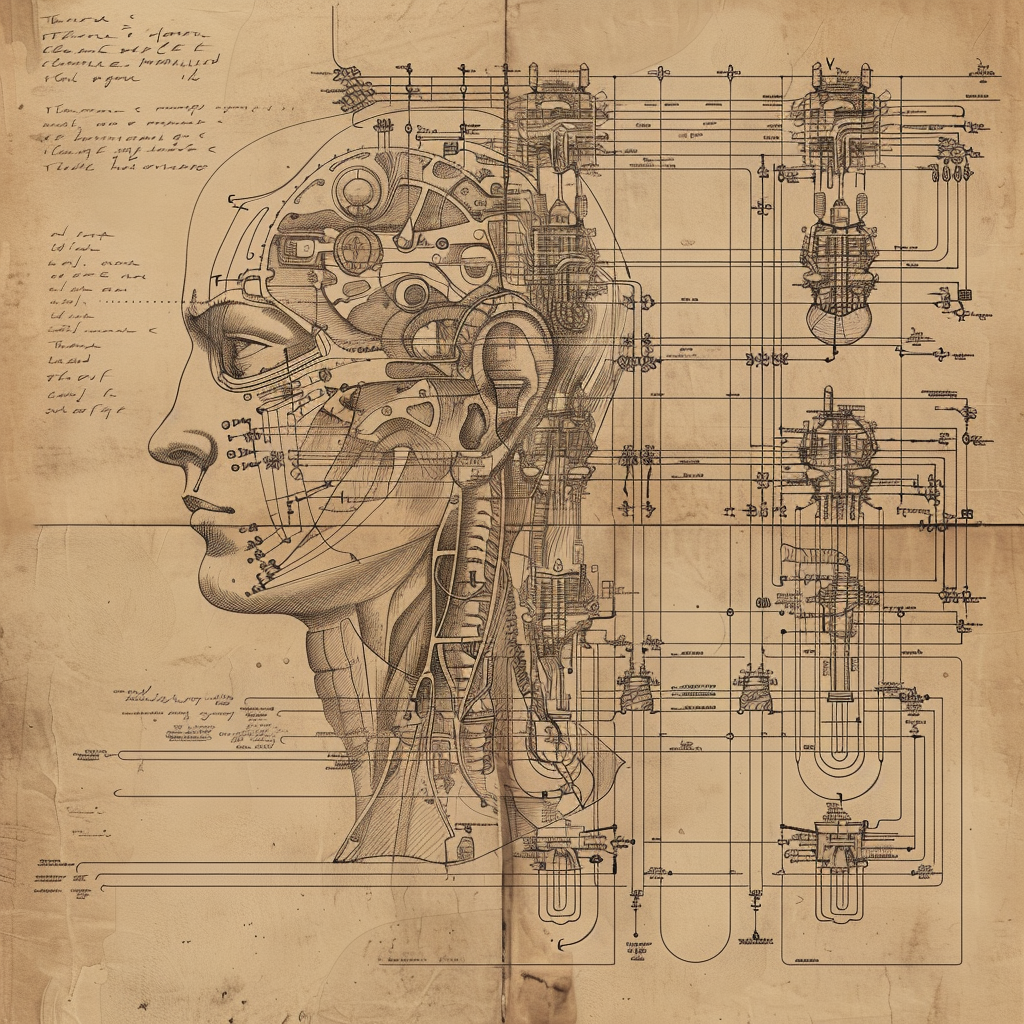
AI Agent Capabilities Engineering Framework introduces a mental model for designing AI agents based on cognitive and behavioral sciences. The framework categorizes capabilities into Perceiving, Thinking, Doing, and Adapting, aiming to equip AI agents for complex tasks with human-like proficiency.

Automating resource management in large language model training optimizes efficiency, enabling focus on experimentation and innovation. AWS Trainium and AWS Batch integration offers scalable, cost-effective deep learning training with streamlined orchestration.

AI-powered blood test predicts Parkinson's 7 years early, improving treatment research. Test could be available in NHS labs in 2 years.

Businesses can modernize document handling with intelligent automation on AWS, optimizing workflows and enhancing accuracy. AI can revolutionize financial processes by automatically extracting data from emails, reducing costs and improving efficiency.

Travel companies are integrating generative AI for virtual travel agents, enhancing customer experiences with personalized recommendations and efficient booking processes. Guardrails for Amazon Bedrock offer robust safeguards to mitigate risks and enable safe deployment of generative AI technologies, providing industry-leading safety protection and customization options for responsible AI pract...

Meredith Whittaker, president of the Signal Foundation, leads the fight against surveillance and data sharing. Organized Google walkouts in 2018 to protest state surveillance and sexual misconduct.

Explaining data normalization and encoding for machine learning algorithms, including Euclidean distance computation. Demonstrates manual and programmatic methods, showcasing a general normalize-and-encode program in C#.

Africa's potential in AI and green jobs shines, but global support is crucial, says Prof Patrick Verkooijen, new Chancellor of University of Nairobi. With vast natural resources and a young population, Africa's promise is undeniable as it heads towards being home to one in four people globally by 2050.

MIT and Meta researchers develop PlatoNeRF, a computer vision technique using shadows and machine learning to create accurate 3D models of scenes, improving autonomous vehicles and AR/VR efficiency. Combining lidar and AI, PlatoNeRF offers new opportunities for reconstructions and will be presented at the Conference on Computer Vision and Pattern Recognition.

IMF report recommends fiscal policies to address AI carbon emissions. Generative AI advances at breakneck speed.

80% of AI projects fail due to poor use cases or technical knowledge. Gen AI simplifies complexity, helping companies find valuable applications. "Paperclips & Friends" explores AI to tackle increasing customer support demands, highlighting the importance of measuring problem magnitude.

MIT researchers found that large language models can understand the visual world and generate complex scenes. By querying LLMs to self-correct code for images, they improved simple drawings and trained a vision system without using visual data.

Name entity recognition (NER) extracts entities from text, traditionally requiring fine-tuning. New large language models enable zero-shot NER, like Amazon Bedrock's LLMs, revolutionizing entity extraction.

AI is transforming drug discovery by helping scientists find cost-efficient molecules with desired properties. MIT's SPARROW algorithm streamlines synthesis planning, optimizing costs and experimental steps for new medicines, agrichemicals, and specialized materials.

Runway introduces Gen-3 Alpha AI video synthesis model, rivaling OpenAI's Sora in quality and generating 10-second clips with improved consistency. Despite budget constraints, Runway impresses with visually stunning video creations from text prompts, showcasing significant advancements in visual fidelity.