
Understanding image storage and representation is key in Computer Vision. RGB and HSV color models provide valuable insights for image processing in Python using OpenCV.

Cadence unveils the Millennium M2000 Supercomputer with NVIDIA technology for accelerated engineering and life sciences applications, delivering up to 80x higher performance. Collaboration with NVIDIA includes plans for AI factories and NVIDIA's purchase of 10 Millennium Supercomputer systems for chip design workflows.

The Chicago musical explores blame-shifting and moral lens in a world of greed and murder. Research shows humans tend to blame AI less when it appears more human-like, with programmers bearing the heaviest burden.

Labor MPs from Victoria and other states are concerned about the overrepresentation of the NSW right faction in the Albanese government. There are talks of potential demotions for Sydney-based frontbenchers like Ed Husic, sparking debate within the party.

Regression Discontinuity Design uses cutoffs to estimate treatment effects. It's a powerful tool for causal inference in scenarios without a control group.

Summary: This article clarifies the misconceptions around backpropagation by explaining the total-derivative and introducing the vector chain rule to simplify complex calculations in neural networks. The implementation of vector calculus in backprop equations optimizes the computation of gradients for all weights in a layer simultaneously, enhancing efficiency in training models.

Summary: Part I of Sutton and Barto's book covers fundamental Reinforcement Learning techniques, while Part II focuses on using deep neural networks for approximate solutions. The upcoming series will benchmark algorithms in Gridworld environments to identify the most effective methods.

Chris Pelkey, deceased in 2021, speaks on forgiveness in AI video fed by his sister. Despite his death, Pelkey 'appeared' in court to confront his killer.

Alan Turing's codebreakers cracked the Enigma code with "Bombes" machines in WWII. Modern computing could easily decipher it now.

Business leaders often have high expectations for AI, but face limited results. To truly leverage AI, understanding its core capabilities - Think, Know, Act - is crucial. AI evolves from an assistant to a strategic collaborator when it can reason, learn, and take meaningful actions towards business goals.
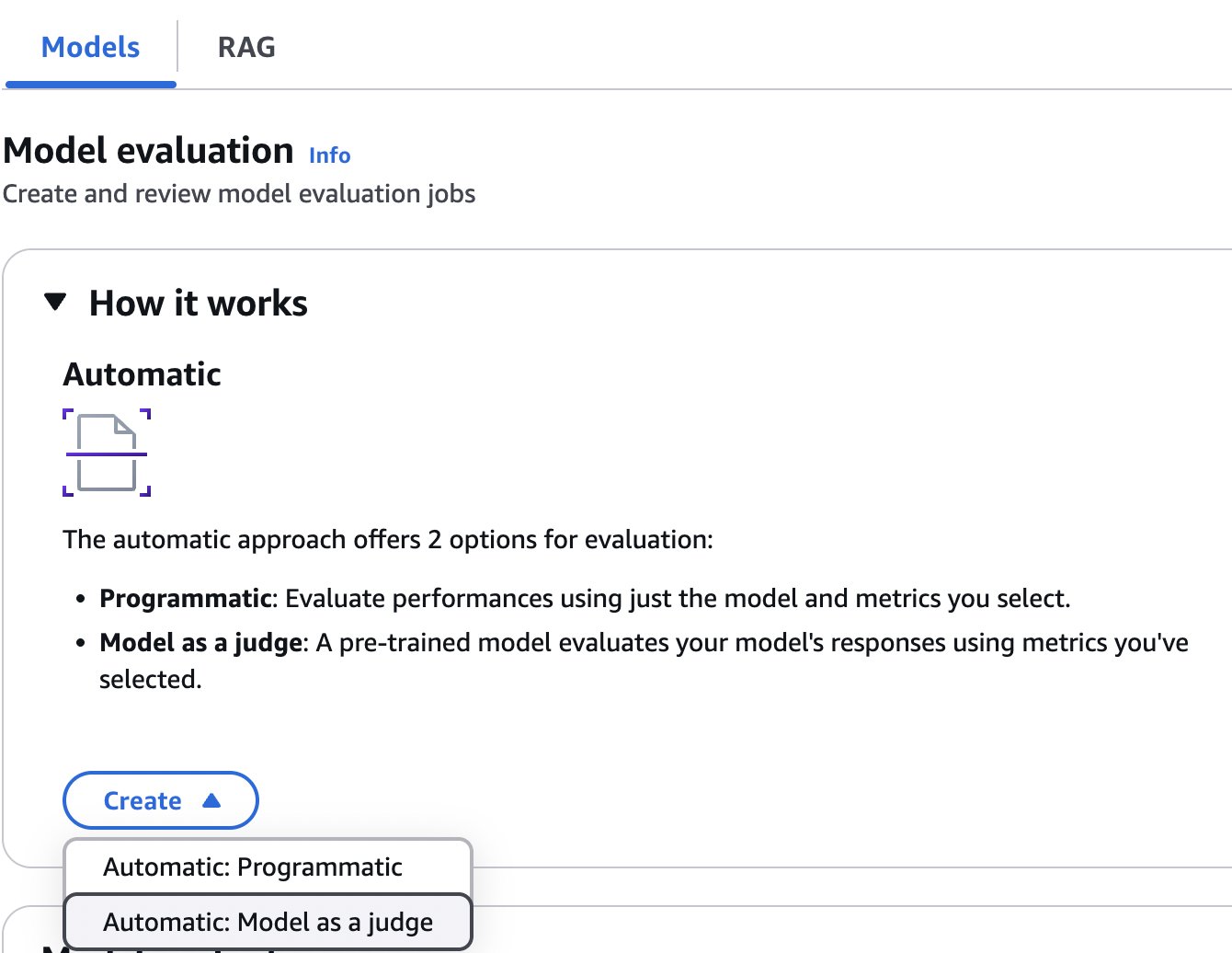
Amazon Bedrock Evaluations introduces LLM-as-a-judge technique for evaluating models and RAG systems, enabling custom metrics for tailored assessments. Organizations can now systematically evaluate models and applications with automated, human-like quality at scale, using built-in or custom metrics.

Text classification is vital for various applications. Large language models offer efficiency, but custom ML models may provide higher accuracy.

OpenAI backtracks on for-profit transformation, nonprofit arm to control ChatGPT. Decision made after input from civic leaders and attorneys general.

AI labs are preparing for rogue AIs colluding against humans, but the real threat is AI making humans obsolete in all aspects of life. AI could replace humans economically, culturally, and socially, leaving us wondering our place in a world where AI does everything better.

Amazon faces ethical responsibility to prevent chatbot-written books on sensitive topics like managing ADHD. AI-generated works flood marketplace with misleading information, from travel guides to mushroom foraging books.