WeatherNext: one more day before the storm
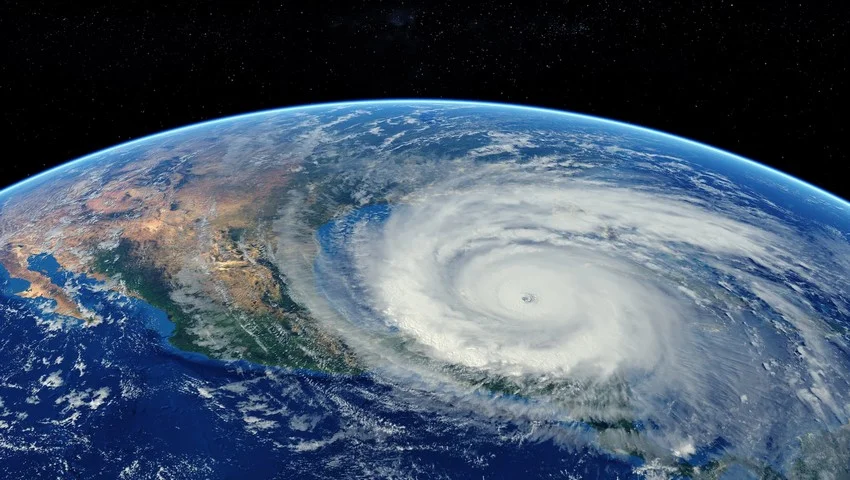
Tropical cyclones are among the deadliest weather events on Earth. For forecasters, every additional hour of reliable warning can provide valuable time to evacuate communities, prepare emergency services, and protect infrastructure. Google DeepMind’s WeatherNext Cyclones AI model has now achieved a major advance in that race against time.
Google DeepMind and Google Research working with the US National Hurricane Center (NHC), the UK Met Office, and the Cooperative Institute for Research in the Atmosphere (CIRA), report that WeatherNext achieves impressive accuracy in predicting a cyclone’s track, intensity, and wind structure simultaneously. On average, its three-day forecasts are as accurate as what previous systems could achieve two days ahead – providing more than a full day of additional useful forecasting lead time. DeepMind describes the improvement as roughly equivalent to a decade of progress in conventional meteorology.
Cyclone forecasting has traditionally involved a difficult trade-off. A storm’s track is largely influenced by large-scale atmospheric circulation, while its intensity depends on much smaller-scale processes around the storm’s core. These factors have typically been handled by separate global and high-resolution models. WeatherNext Cyclones brings them together in a single AI architecture. The model was trained on nearly 20 terabytes of atmospheric data and the IBTrACS database containing almost 5,000 historical tropical cyclones.
WeatherNext uses Functional Generative Networks (FGNs) to produce probabilistic ensembles rather than a single forecast. The latest system can generate 1,000 possible scenarios for each cyclone, helping forecasters identify rare but potentially devastating outcomes such as rapid intensification or an unexpected change in trajectory. A complete 15-day forecast can be generated in less than a minute on a TPU.
One of the study’s most surprising findings is how little spatial resolution the model requires. WeatherNext Cyclones operates with inputs at approximately 28 × 28 km resolution, around 100 times coarser than some traditional intensity-focused models. Yet it still produces strong forecasts of cyclone intensity and wind structure. A smaller WeatherNext 2-mini model operates at 111 × 111 km resolution. DeepMind says researchers do not yet fully understand why the models remain effective with such coarse inputs, leaving the question open for further research.
WeatherNext is not simply a benchmark exercise. During the 2025 Atlantic hurricane season, the National Hurricane Center used the model operationally. According to DeepMind, WeatherNext helped anticipate Hurricane Melissa’s rapid intensification and landfall in Jamaica, providing additional time for preparations.
Google DeepMind has released WeatherNext Cyclones, WeatherNext 2, and WeatherNext 2-mini under an Apache 2.0 license on GitHub, including code and model weights, making the technology available to researchers and organizations interested in developing specialized forecasting applications. The compact WeatherNext 2-mini can run on a single TPU through a public Google Colab notebook. The company has also expanded Weather Lab, its public platform for exploring experimental AI weather forecasts, to include variables such as temperature, precipitation, and wind alongside cyclone predictions.
WeatherNext is part of a broader transformation in AI-based Earth science. A Nature Communications perspective – “Bridging the weather and climate divide with artificial intelligence” argues that AI is beginning to connect short-term weather forecasting with longer-term climate science, two fields that have historically developed in isolation. The paper surveys the broader landscape of approaches driving this convergence, including probabilistic forecasting, generative models, climate emulation, and hybrid physics-AI systems, and names WeatherNext 2 specifically as an example of functional generative networks achieving faster inference with performance matching or exceeding traditional ensemble methods.
The same paper is not uncritical, however. It also names Google’s Weather Lab as an example of how a focused, single-purpose AI application can deliver real operational gains – while cautioning that such systems carry trade-offs, including potential overfitting to specific tasks and dependence on one company’s proprietary data and infrastructure. That tension, between rapid gains from well-resourced private labs and the field’s push for open, reproducible tools, runs through the paper’s broader call for more openly shared datasets, benchmarks, and model components across the weather and climate research community.