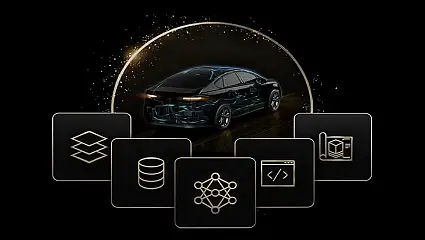
NVIDIA has just made its most powerful self-driving AI free for anyone to build on. Alpamayo 2 Super combines multimodal perception, reasoning, trajectory planning and action generation in a single model, while also producing data that can be used to train and evaluate other autonomous-driving systems.

Skydweller is a solar-powered drone designed for long-endurance missions. With AI-powered radar, self-healing systems, and the ability to fly autonomously for up to 90 days straight, it sets a new standard for persistent aerial surveillance and data collection.

ATMO is a robot that transforms mid-air from a flying drone into a ground rover. By overcoming the long-standing challenge of hybrid robots getting stuck on rough terrain, this breakthrough unlocks new possibilities for autonomous delivery, disaster response, and planetary exploration.

NVIDIA Cosmos enhances AI robotics by generating photorealistic 3D environments, allowing developers to train autonomous systems without relying on costly real-world data. With advanced world foundation models, Cosmos drives innovation in robotics, self-driving cars, and industrial automation.

A new computer vision system significantly reduces energy consumption while providing real-time, realistic spatial awareness. It enhances AI systems' ability to accurately perceive 3D space – crucial for technologies like self-driving cars and UAVs.

Drone racing has been used to test neural networks for future space missions. This project aims to autonomously manage complex spacecraft maneuvers, optimizing onboard operations and enhancing mission efficiency and robustness.

The solar-powered Zephyr drone has set world records for endurance and altitude, staying aloft for 64 days at heights of up to 75,000 feet. With applications ranging from earth observation to mobile phone base stations, Zephyr provides critical connectivity in remote areas.
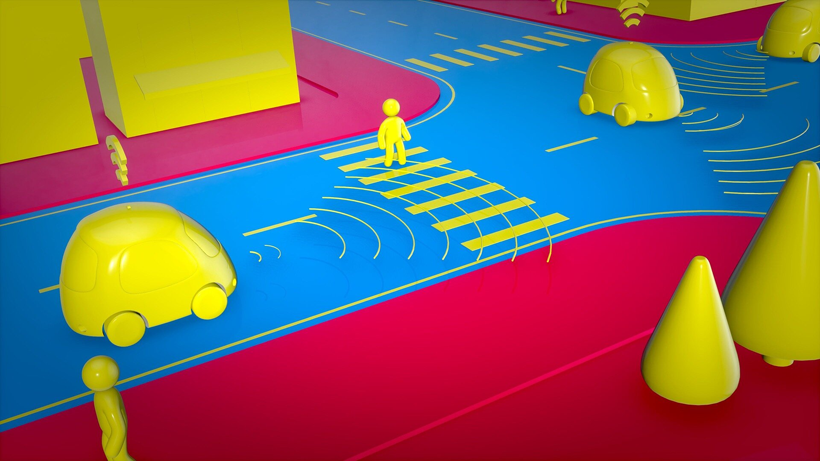
Self-driving cars have long been considered the next generation mode of transportation. To enable autonomous navigation of such vehicles numerous different technologies need to be implemented.
“Over the last decade, Affectiva has continuously pursued new patents as we have pioneered and advanced the fields of Emotion AI and Human Perception AI. The breadth and depth of our patent portfolio reflect our commitment to pushing the boundaries of computer vision, machine learning, deep learning and AI at the edge; and, is a testament to our leadership in defining the many creative and diverse applications of Human Perception AI that are shaping industries today and in the future.”