
Generative AI models are great at getting “pretty close” to a solution – but in robotics, industrial systems, and other physical applications, close isn’t good enough. MIT’s new HardFlow algorithm lets models explore freely during generation while ensuring the final output satisfies strict, non-negotiable constraints.

Humanoid robots are breaking human speed records, yet some still crash into barriers and struggle with basic physical control. The most fascinating breakthrough, though, is the android that taught itself an entirely new running style, one its engineers never programmed.
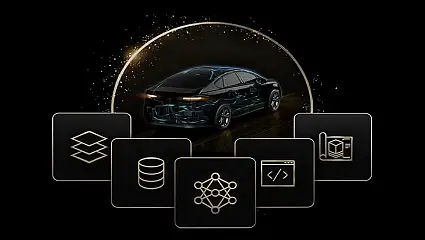
NVIDIA has just made its most powerful self-driving AI free for anyone to build on. Alpamayo 2 Super combines multimodal perception, reasoning, trajectory planning and action generation in a single model, while also producing data that can be used to train and evaluate other autonomous-driving systems.
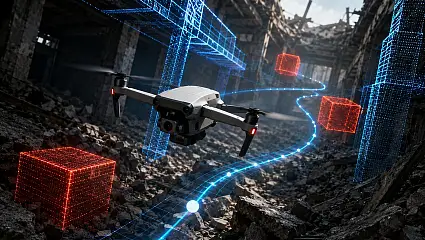
MIT researchers have developed MIGHTY, an open-source system that enables autonomous drones to navigate dangerous environments with greater speed and precision. Combining LiDAR, onboard AI, and advanced trajectory planning, MIGHTY allows drones to dodge obstacles in milliseconds while maintaining smooth flight.

In 2025, AI moved from hype to reality, becoming a core force shaping how we create content, browse the web, work, and make decisions. This article explores the biggest shifts: the rise of agentic AI and vibe coding, tightening regulation, and the growing battle over quality and trust.

The Speech-to-Reality system transforms spoken commands into physical objects using a combination of natural language processing, 3D generative AI, and robotic assembly. The system enables users to request items like chairs, stools, or shelves and have them assembled by a robotic arm in as little as five minutes.

Scientists have engineered a transneuron – an artificial neuron capable of mimicking the activity of multiple regions of the human brain. This advancement could accelerate the development of robots with human-like perception, adaptability, and learning.

FlyingToolbox is a drone system capable of docking and exchanging tools mid-air, even in turbulent airflow. This technology enables precise multi-stage operations: from maintenance and high-altitude construction to emergency response missions.

Google DeepMind has introduced Gemini Robotics – an AI system that allows robots to “think before acting,” plan complex tasks, and even transfer skills across different robot types. With advanced reasoning, safety features, and cross-embodiment learning, robots become truly intelligent.

Now AI can autonomously generate the “brains” of robots, creating a fully functional drone control system 20 times faster than humans. The experiment with generative AI models like ChatGPT, Gemini, and Claude reveals both the potential and current limits of machines building machines.

The new system enables groups of robots to act as a unified team. The MultiRobot FrameWork lets robots share real-time information about their environment, positions, and tasks, mirroring the collective behavior seen in insect colonies, but powered by advanced sensors and computation.

Skydweller is a solar-powered drone designed for long-endurance missions. With AI-powered radar, self-healing systems, and the ability to fly autonomously for up to 90 days straight, it sets a new standard for persistent aerial surveillance and data collection.

ATMO is a robot that transforms mid-air from a flying drone into a ground rover. By overcoming the long-standing challenge of hybrid robots getting stuck on rough terrain, this breakthrough unlocks new possibilities for autonomous delivery, disaster response, and planetary exploration.

MIT researchers have developed MiFly, a low-power, RF-based system that enables drones to self-localize in complete darkness, indoors, and in low-visibility conditions. By using a single backscatter tag and dual-polarization radar, MiFly navigates without relying on visual cues or external infrastructure.

NVIDIA Cosmos enhances AI robotics by generating photorealistic 3D environments, allowing developers to train autonomous systems without relying on costly real-world data. With advanced world foundation models, Cosmos drives innovation in robotics, self-driving cars, and industrial automation.

The two-trajectory planning system lets MAVs explore unknown paths while always maintaining a safe backup route. Powered by LiDAR-based perception and the CIRI algorithm, drones dynamically generate real-time flight paths for high-speed navigation in unpredictable environments.

The Indian Patent Office has granted a patent for the innovative landing system for mini-UAVs. This technology enables precise landings in challenging terrains and has potential applications in both military and civilian logistics, including high-altitude deliveries and emergency.

A low-cost, innovative accident avoidance system for drones uses onboard sensors and cameras to autonomously prevent mid-air collisions. This technology is crucial for UAV operations, ensuring safety and efficiency in increasingly crowded airspaces.

A new computer vision system significantly reduces energy consumption while providing real-time, realistic spatial awareness. It enhances AI systems' ability to accurately perceive 3D space – crucial for technologies like self-driving cars and UAVs.

Researchers created insect-inspired autonomous navigation strategies for tiny, lightweight robots. Tested on a 56-gram drone, the system enables it to return home after long journeys using minimal computation and memory.

Drone racing has been used to test neural networks for future space missions. This project aims to autonomously manage complex spacecraft maneuvers, optimizing onboard operations and enhancing mission efficiency and robustness.
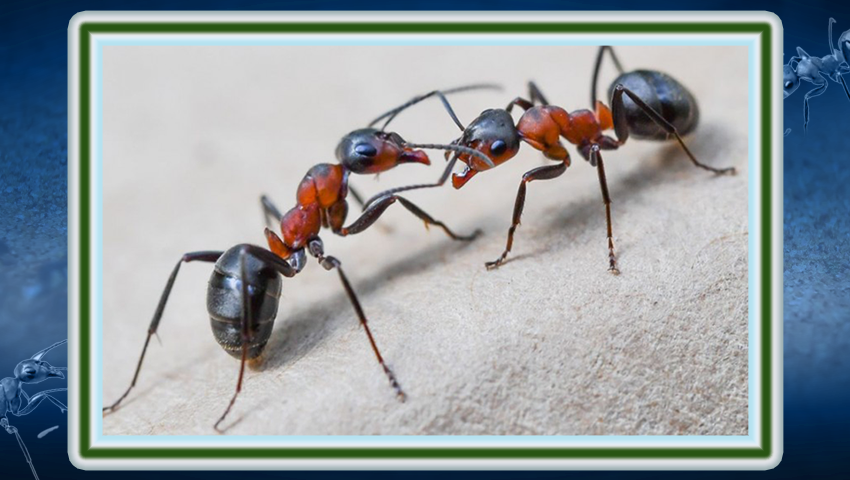
Inspired by ants, researchers from the Universities of Edinburgh and Sheffield are developing an artificial neural network to help robots recognize and remember routes in complex natural environments.
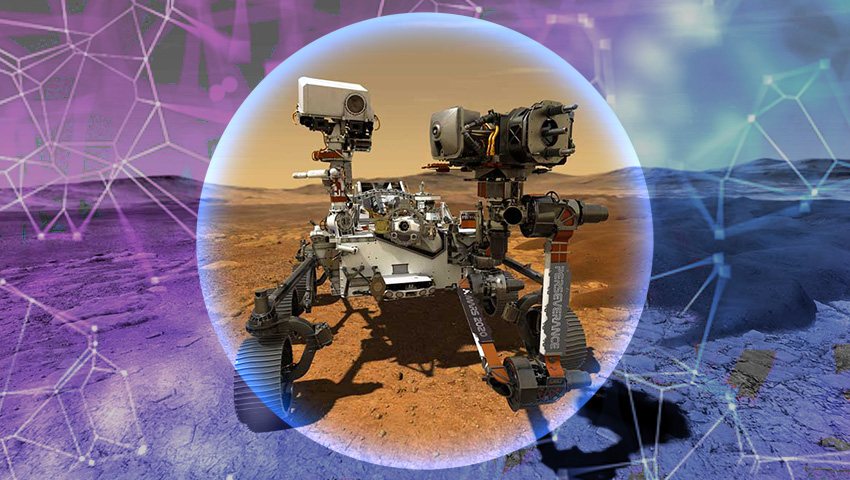
The European Space Agency is developing a sample retrieval system using neural networks, aiming to collect and transport samples from Mars. The challenging mission of returning samples gathered by Perseverance rover is considered crucial for unlocking the mysteries of the Red Planet.
Researchers are working on a more effective way to train machines for uncertain, real-world situations. A new algorithm will decide when a “student” machine should follow its teacher, and when it should learn on its own.
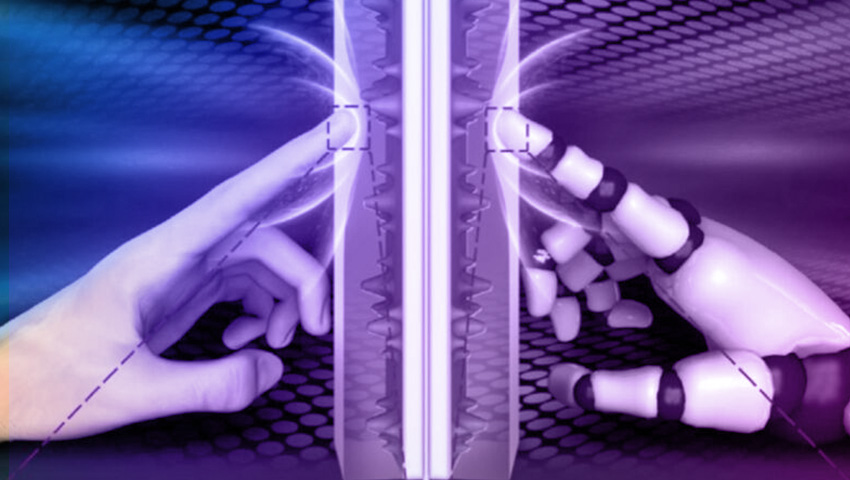
Scientists presented a smart bionic finger that can create 3D maps of the internal structure of materials by touching their exterior surface.
Scientists from the University of Michigan conducted a study of robot behavior strategies to restore trust between a bot and a human. Can such strategies fully restore trust and how effective are they after repeated errors?
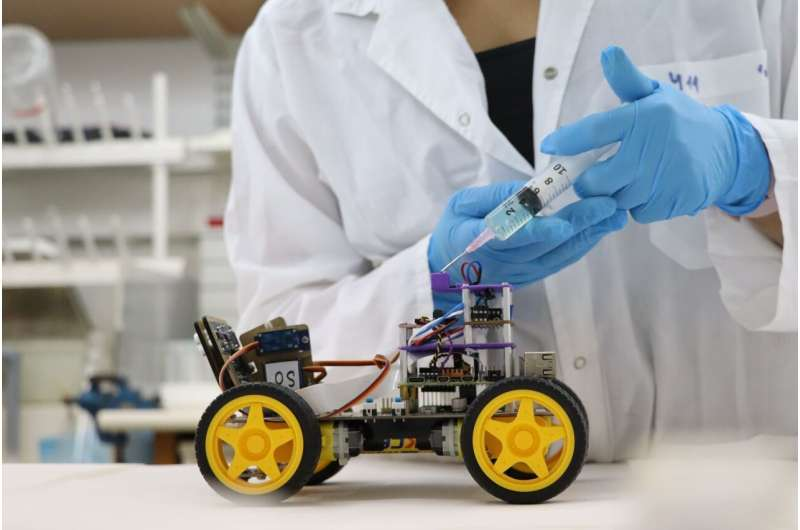
Tel Aviv University researchers have achieved a technological-biological breakthrough: in response to the presence of an odor, the new biological sensor sends data that the robot is able to detect and interpret.
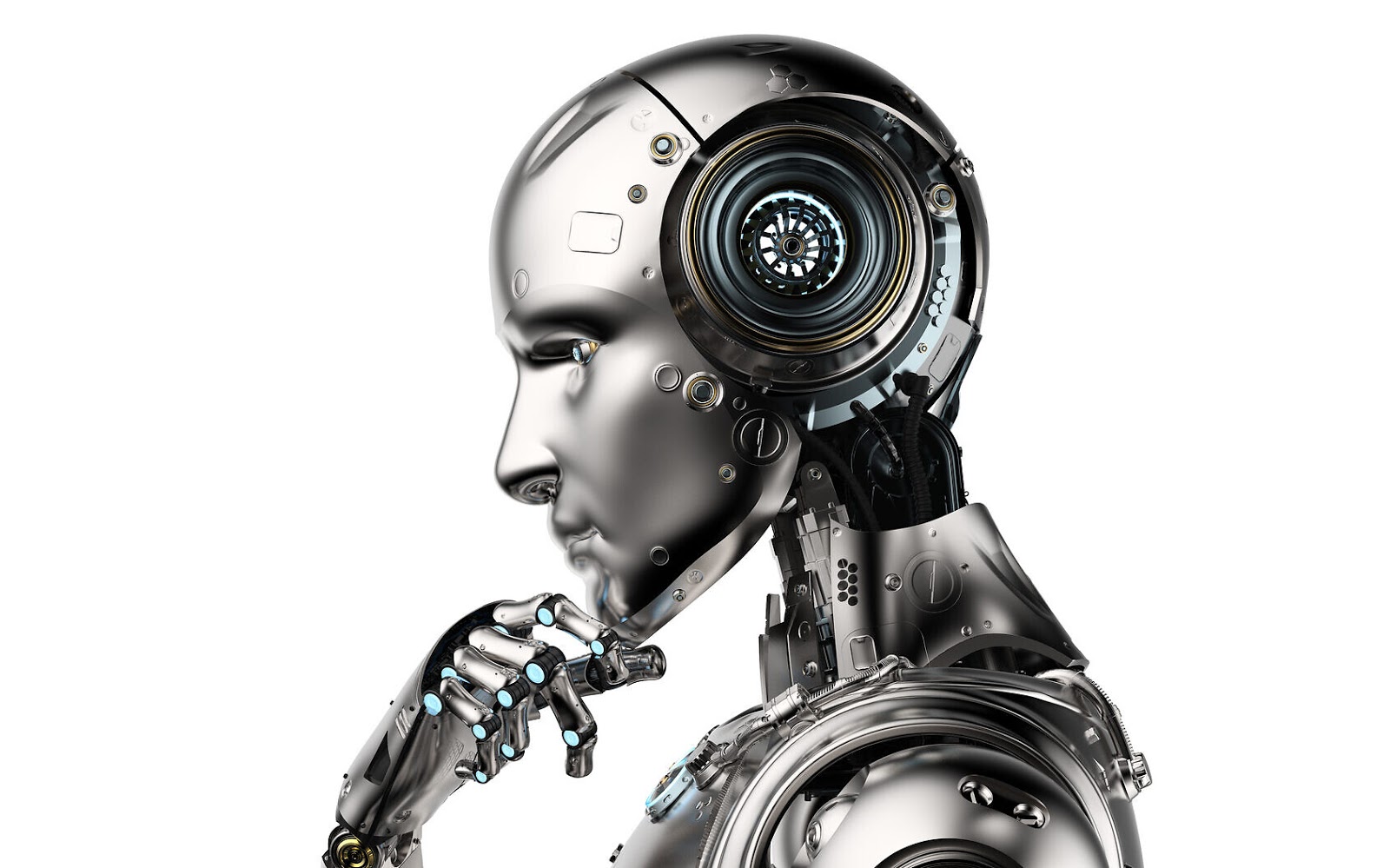
With increased social media usage in recent years, and all of us living our lives online yet more, we need to develop the ways to reduce threats, ensure our safety and remove interactions that are creating concern. Artificial Intelligence (AI) is a progressed machine learning technology that plays an important role in contemporary life and is also essential in how today's social media networks function.