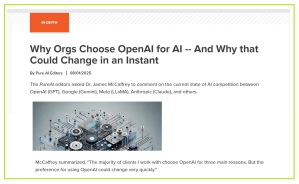
Companies choose AI platforms based on name brand, partnerships, and developer resources. OpenAI risks losing users if developer resources degrade.
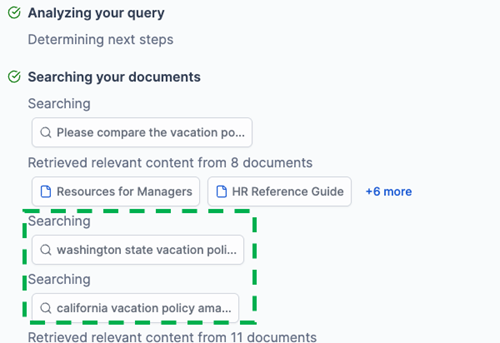
Amazon Q Business utilizes generative AI to assist organizations in unlocking value from their data. The introduction of Agentic RAG brings a new intelligent, agent-based retrieval strategy for more accurate and comprehensive responses to complex enterprise queries.

Judge criticizes lawyers for submitting misleading AI-generated documents in murder case, stressing the importance of independent verification. Justice Elliott emphasizes the need for thorough checks on AI-generated content in court filings.
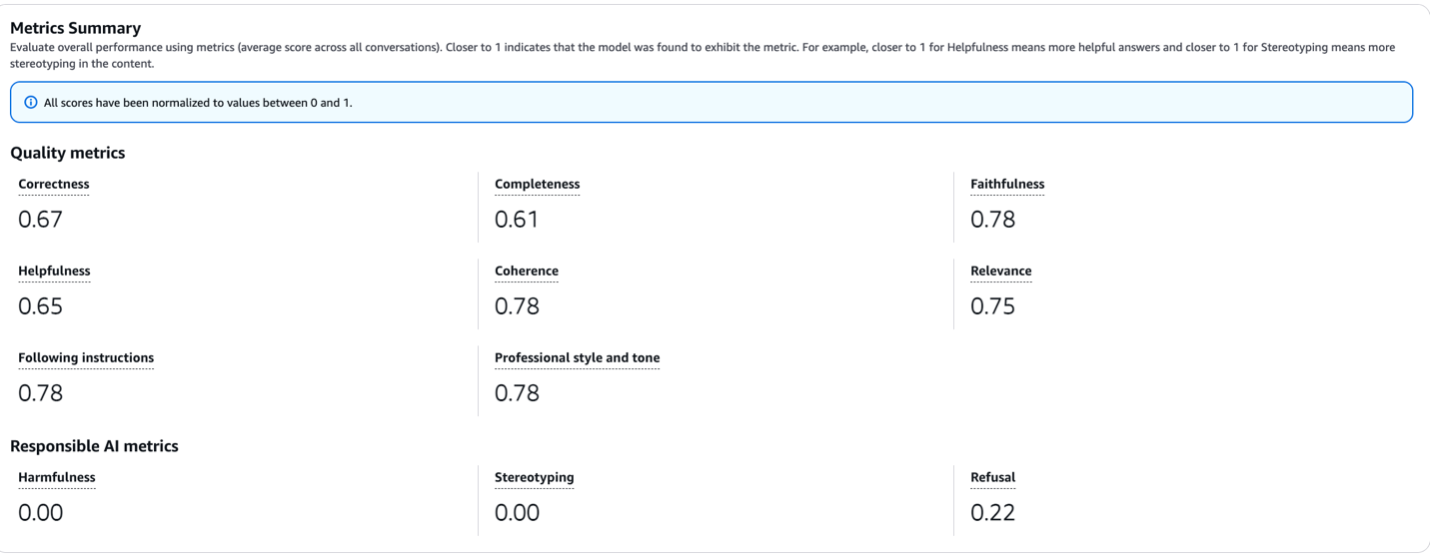
Large language models (LLMs) can now cite sources, enhancing trust by allowing users to verify information and promoting transparency in AI-generated content. Amazon Nova models demonstrate how citations improve accuracy, trust, ethics, and usability, addressing limitations of LLMs and maintaining professional standards.

Jobs and Skills Australia dismisses doomsday AI predictions; most occupations will be augmented by artificial intelligence. Consider nursing, construction, or hospitality for AI-proof careers, not book-keeping, marketing, or programming.

MIT's INM aims to transform manufacturing through technology, talent development, and scaling for higher productivity and resilience. Industry giants like Amgen, GE Vernova, and Siemens are collaborating with MIT to break manufacturing barriers and drive adoption of AI and automation.

Labor debates response to AI technology amid fears of intellectual property theft. Human rights commissioner warns of AI entrenching racism and sexism in Australia.

MIT's LIDS team develops software to evaluate and improve text classifiers for automated conversations, ensuring accuracy and reliability. Chatbots and online information sites are increasingly using sophisticated algorithms to classify content, raising concerns about accuracy and potential vulnerabilities.
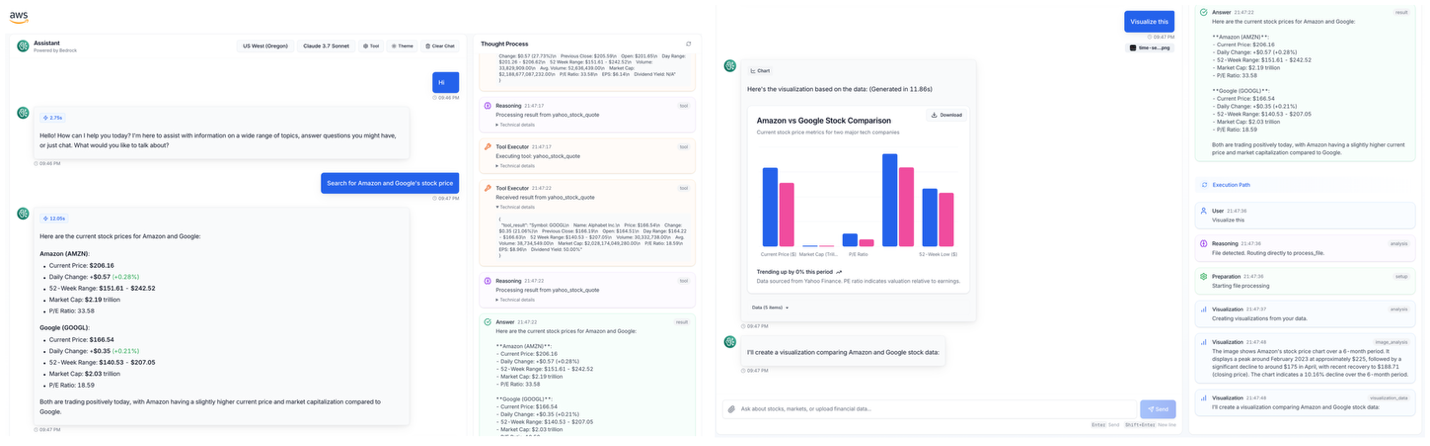
Agentic AI transforms financial services with autonomous decision-making. Combining LangGraph, Strands Agents, and MCP for innovative financial analysis workflows.

Atlassian founder pushes for US-style copyright law in Australia to enable AI innovation. Scott Farquhar warns of investment risks without legal AI content access.

Black Forest Labs’ FLUX. 1 Kontext [dev] image editing model is now available as an NVIDIA NIM microservice, simplifying generative AI workflows for image editing with simple language prompts. NVIDIA and Black Forest Labs collaborated to optimize the model size and performance, making it accessible to a wider audience for coherent, high-quality image edits.

New series on transforming Australia's economy features Nobel laureate Daron Acemoglu's roadmap for AI adoption. Genuine productivity comes when technology augments human capability.
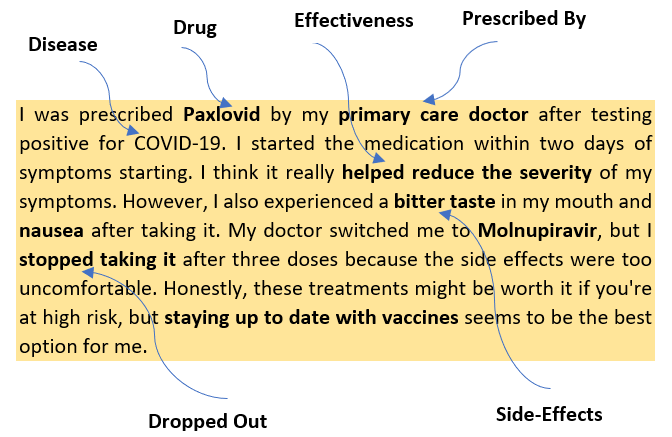
Indegene Limited utilizes Amazon technology to extract valuable insights from digital healthcare conversations, helping pharmaceutical companies engage effectively with patients and healthcare professionals. The company's Social Intelligence Solution uses advanced AI to address the growing preference for digital channels, providing strategic insights for the life sciences industry.
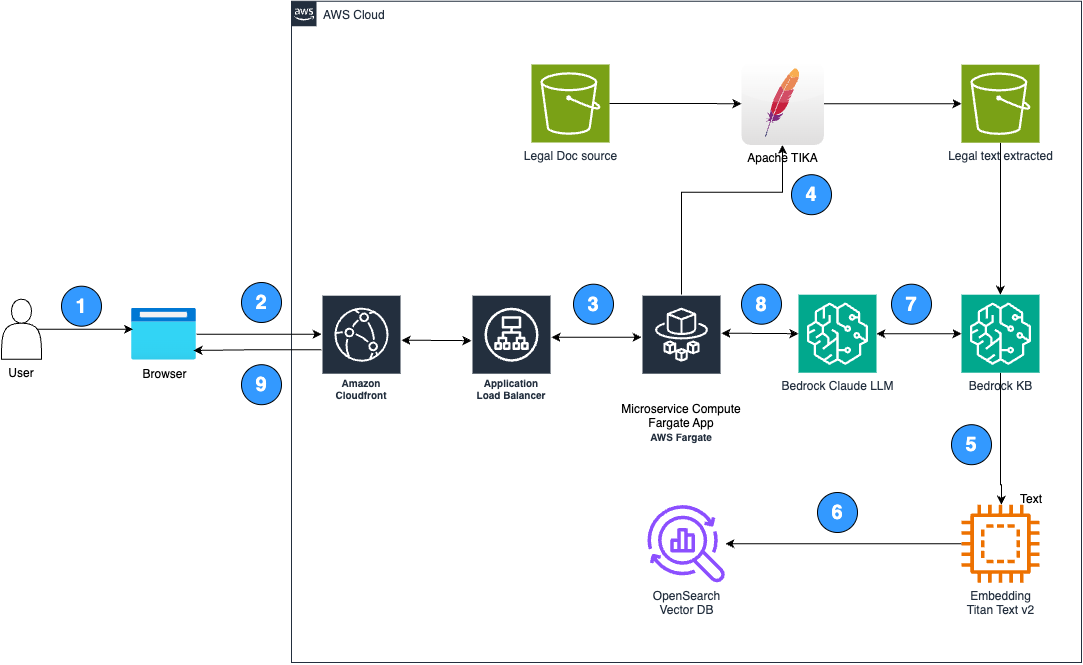
Lexbe leveraged Amazon Bedrock to revolutionize legal document review with AI and machine learning, enhancing efficiency and accuracy. By integrating Amazon Bedrock into Lexbe Pilot, legal teams can quickly extract insights from massive datasets, preventing costly oversights.
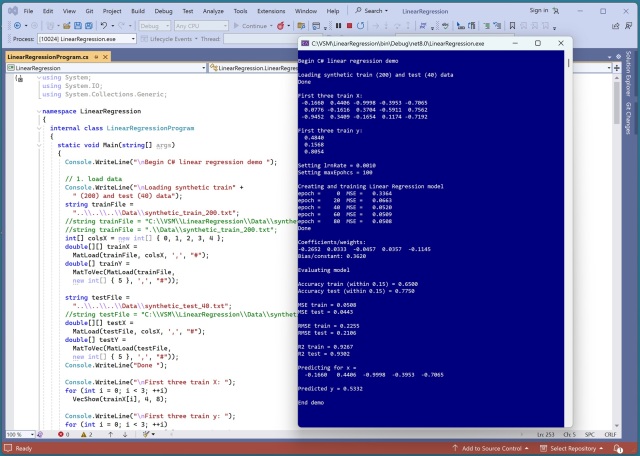
Machine learning regression models aim to predict a numeric value. Key evaluation metrics include MSE, RMSE, and R2 for model accuracy. R2 measures how well a model predicts compared to guessing the average y values.