
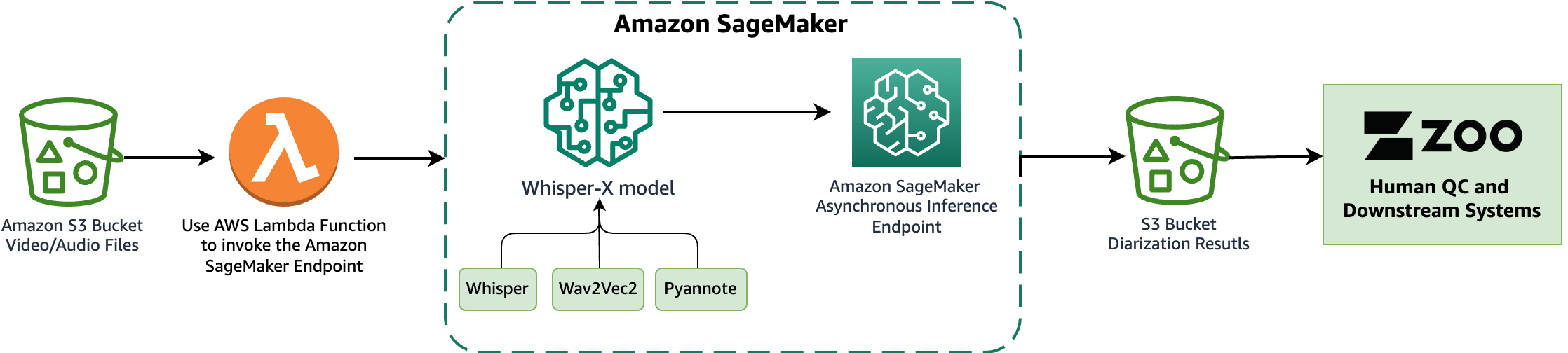
ZOO Digital revolutionizes content localization with automated diarization using Amazon SageMaker, cutting down on manual labor and time. Trusted by top entertainment names, ZOO Digital aims to achieve localization in under 30 minutes through scalable machine learning models.
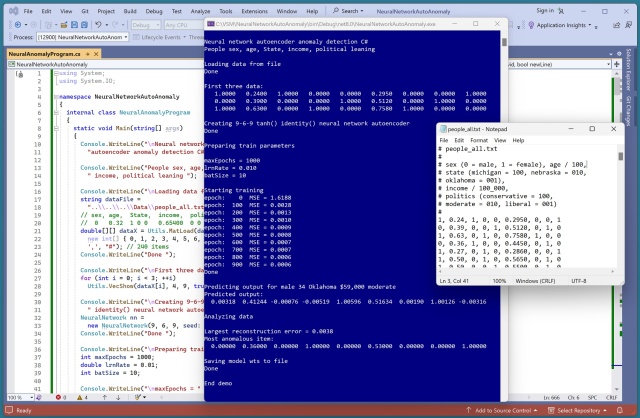
An autoencoder predicts input data, flagging anomalies. Implemented in C#, it detected a liberal male from Nebraska with $53,000 income as most anomalous. Model trained with 9-6-9 architecture, revealing insights on neural network systems.
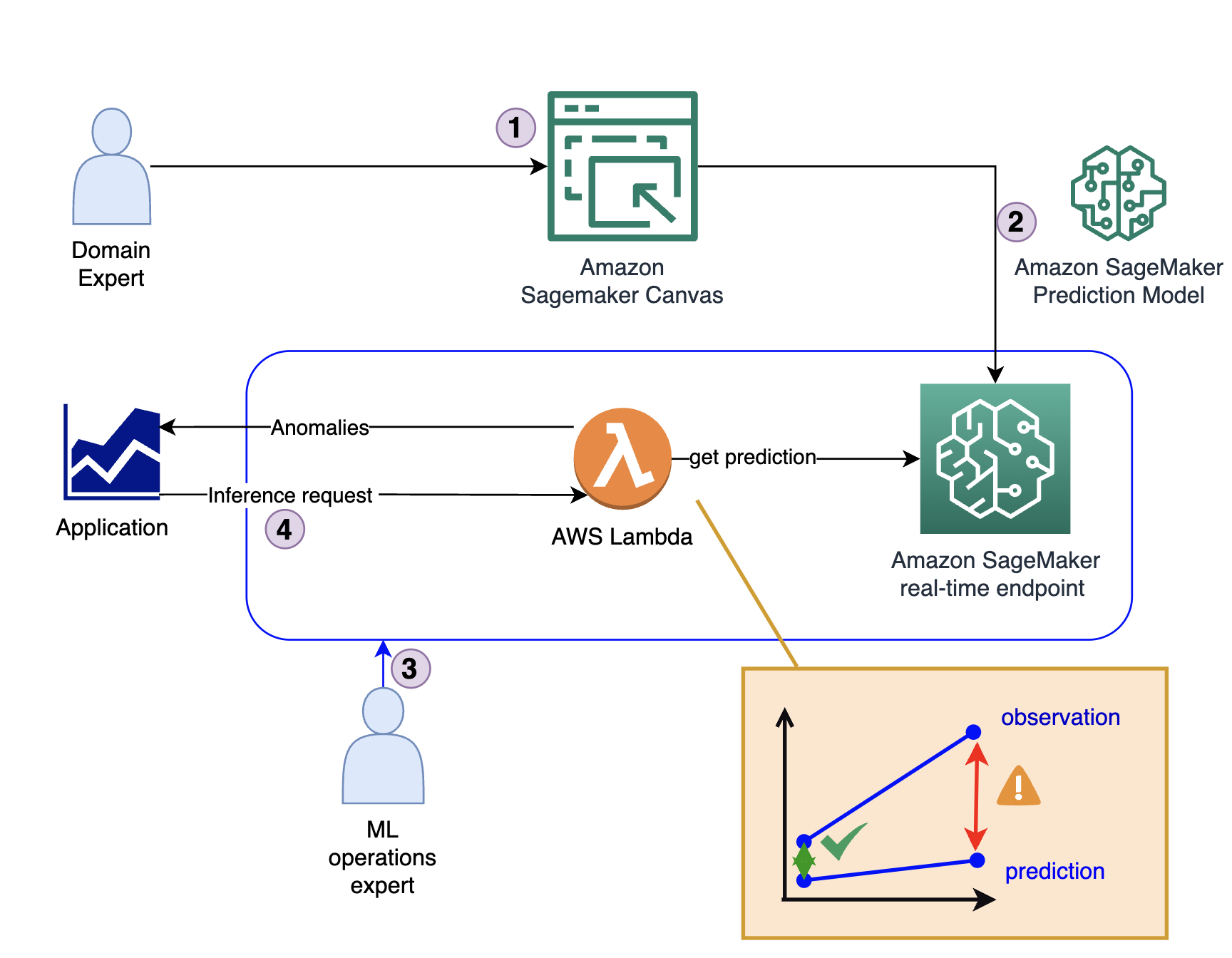
Amazon SageMaker Canvas enables domain experts to create powerful analytics and ML models without coding. It helps detect abnormal data points in industrial machines, crucial for predictive maintenance and performance improvements.

MIT, Brigham and Women's Hospital, and Duke University researchers develop innovative strategy to identify drug transporters in the digestive tract, revealing potential drug interactions. Study in Nature Biomedical Engineering highlights the importance of understanding drug transport mechanisms for improving patient treatment and drug development.
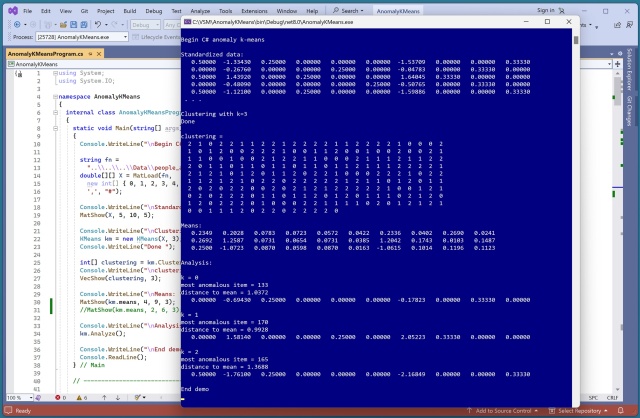
Article highlights: Anomaly detection categories include tabular, image, and time series data. K-means clustering and neural autoencoder techniques are commonly used for tabular data. One-over-n-hot encoding offers a unique solution for categorical data in k-means clustering, improving accuracy.
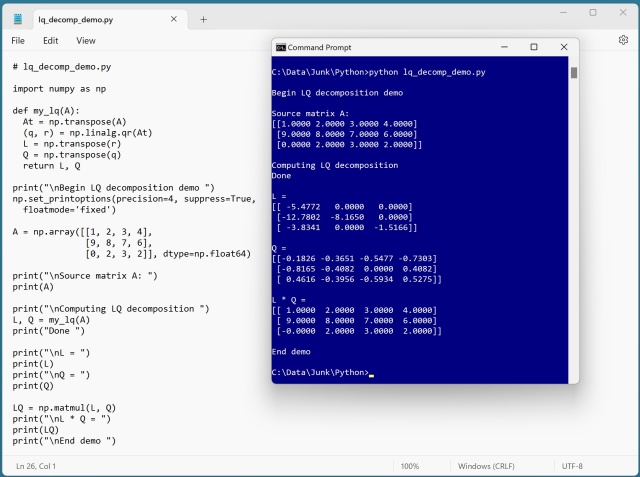
Matrix decomposition breaks down matrices into components - QR, SVD, and LQ. LQ is a special type of QR decomposition used for solving linear equations, demonstrated in a Python program.
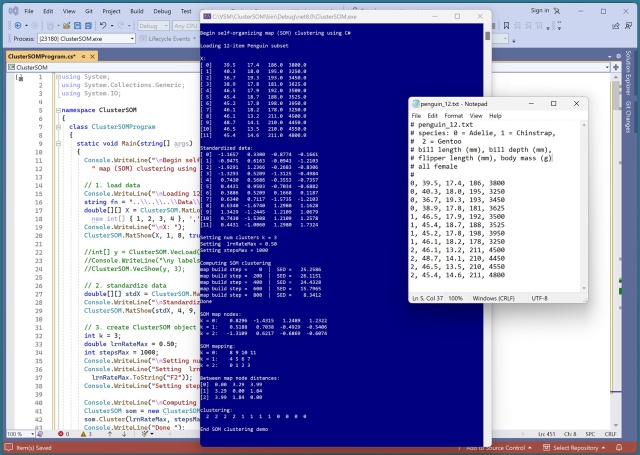
Article highlights: K-means clustering is common, but other techniques like DBSCAN, Gaussian mixture model, and Spectral clustering are also used. Self-organizing map (SOM) clustering creates clusters based on similarity. Implementation in C# using Penguin dataset shows clustering results.

Amazon Bedrock offers high-performing AI models from top companies like Meta and Cohere. The Titan Image Generator creates realistic images from simple text prompts, while the Multimodal Embeddings model enhances search accuracy by understanding text and images.

Learn how to create custom IPython Jupyter Magic commands to enhance your notebook experience. Use Hamilton library as an example for better development ergonomics. Explore the power of line and cell magics for dynamic notebook functionalities.

Article highlights the risks of AI development: privacy intrusion & consent issues, algorithmic bias. Companies face ethical dilemmas that can lead to reputational damage and loss of trust with users. Importance of prioritizing responsible AI development to mitigate these risks and build trust.

MIT researchers developed a tiny, secure terahertz ID tag to prevent counterfeiting, using metal particles in glue for authentication. Machine-learning model detects tampering with over 99% accuracy.

Meta's Code Llama foundation models, available on Amazon SageMaker JumpStart, offer state-of-the-art large language models for generating code and natural language prompts. Code Llama comes in three variants and various sizes, trained on billions of tokens, providing stable generations with up to 100,000 tokens of context. SageMaker JumpStart offers access to a range of foundation models, inclu...

OpenAI introduces Sora, a groundbreaking text-to-video AI model creating photorealistic HD videos from written descriptions. Reportedly exceeding current models in fidelity, it's causing a stir among tech experts and journalists.

Retrieval-augmented generation (RAG) systems are crucial for real-world applications, and the "Needle in a Haystack" test evaluates their performance in identifying specific information within a large body of text. Differences in prompts and models can greatly impact outcomes, emphasizing the need for thorough evaluation during development and deployment.

The telecommunications industry is embracing generative AI as a breakout technology, with 43% of professionals investing in it, according to a survey by NVIDIA. The survey also revealed that AI adoption is seen as a source of competitive advantage, with 56% of respondents agreeing that it is important to their company's future success.