
Datacentres are facing pressure to meet their own energy needs. The rapid growth of the industry is driven by AI adoption.

Kate Fox's husband, Joe Ceccanti, tragically died after spending 12 hours a day with a chatbot. Despite no history of depression, he unexpectedly jumped from a railway overpass, leaving loved ones in shock.

Alberto Carvalho placed on leave after FBI search, Andres Chait appointed interim superintendent by LA school board. Trustee's unanimous decision follows closed-door meetings regarding Carvalho's employment with the nation's second largest school district.

Campaign groups urge Liz Kendall to address potential doubling of UK electricity demand from datacentres, posing threat to decarbonization efforts. Developers under pressure to disclose impact on net greenhouse gas emissions.

Block's CEO, Jack Dorsey, announced layoffs to drive profits, leading to a 20% stock surge. AI productivity gains cited as reason for cuts at Fintech company.

OpenAI secures new Pentagon deal post-Anthropic exclusion, vows to maintain safety protocols amid AI ethics clash with DOD. Trump orders immediate halt to federal use of Anthropic technology, escalating public AI safety dispute.

Goldman Sachs notes investors favoring 'Halo trade' for AI-proof companies with tangible assets like energy and transport infrastructure. Investors seek 'heavy-asset, low-obsolescence' firms to weather AI disruption.
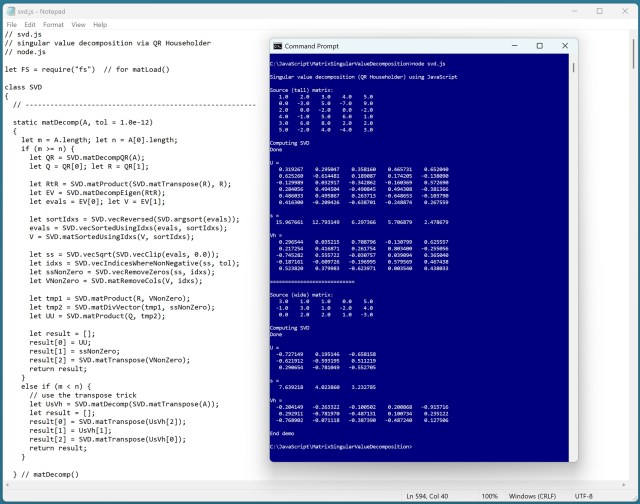
JavaScript SVD implementation with Householder + QR algorithm is intriguing but lacks stability compared to Jacobi. SVD breakdown into U, s, Vh matrices is crucial in software algorithms, challenging in numerical programming.
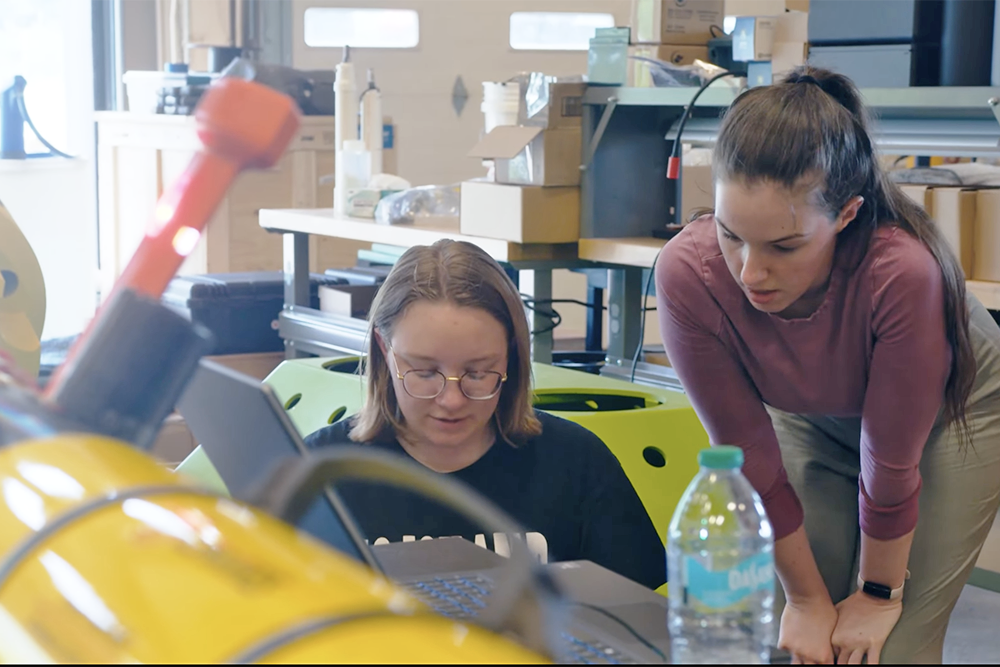
Ivy Mahncke, a robotics engineering student, developed underwater navigation algorithms at MIT Lincoln Laboratory. Her hands-on work included field tests in the Atlantic Ocean, showcasing her potential as a future engineer.

Brady Tkachuk, captain of NHL's Ottawa Senators, regrets Trump joke insulting Canadians after US victory over Canada at Winter Olympics. White House AI video shows Tkachuk's controversial remarks, sparking backlash.
WPP plans to become a 'simpler, lower-cost, AI-enabled business' to save £500m annually by 2028, with asset sales and job cuts. Radical restructuring aims to counter AI growth threat, costing £400m over two years.

UK media companies, including BBC and Financial Times, seek global frameworks to protect journalism from unauthorized use by AI firms. Guardian-led coalition aims to ensure fair compensation for original content to ensure industry sustainability.
Study: ChatGPT Health fails to recommend hospital visits when necessary, risking harm. OpenAI's AI platform overlooks urgent care and suicidal ideation, potentially endangering users' lives.

AI is accelerating COBOL modernization, but success requires complete context and platform-aware input for forward engineering. Mainframe modernization hinges on reverse engineering and a traceable foundation for AI coding assistants.
Learn about Decision Tree Regression implemented from scratch using C# without pointers or recursion in Visual Studio Magazine. Decision trees offer interpretability and can be used alone or in ensembles for regression tasks.